
Techno-Optimism: Move fast and save lives
There are only nine meals between mankind and anarchy

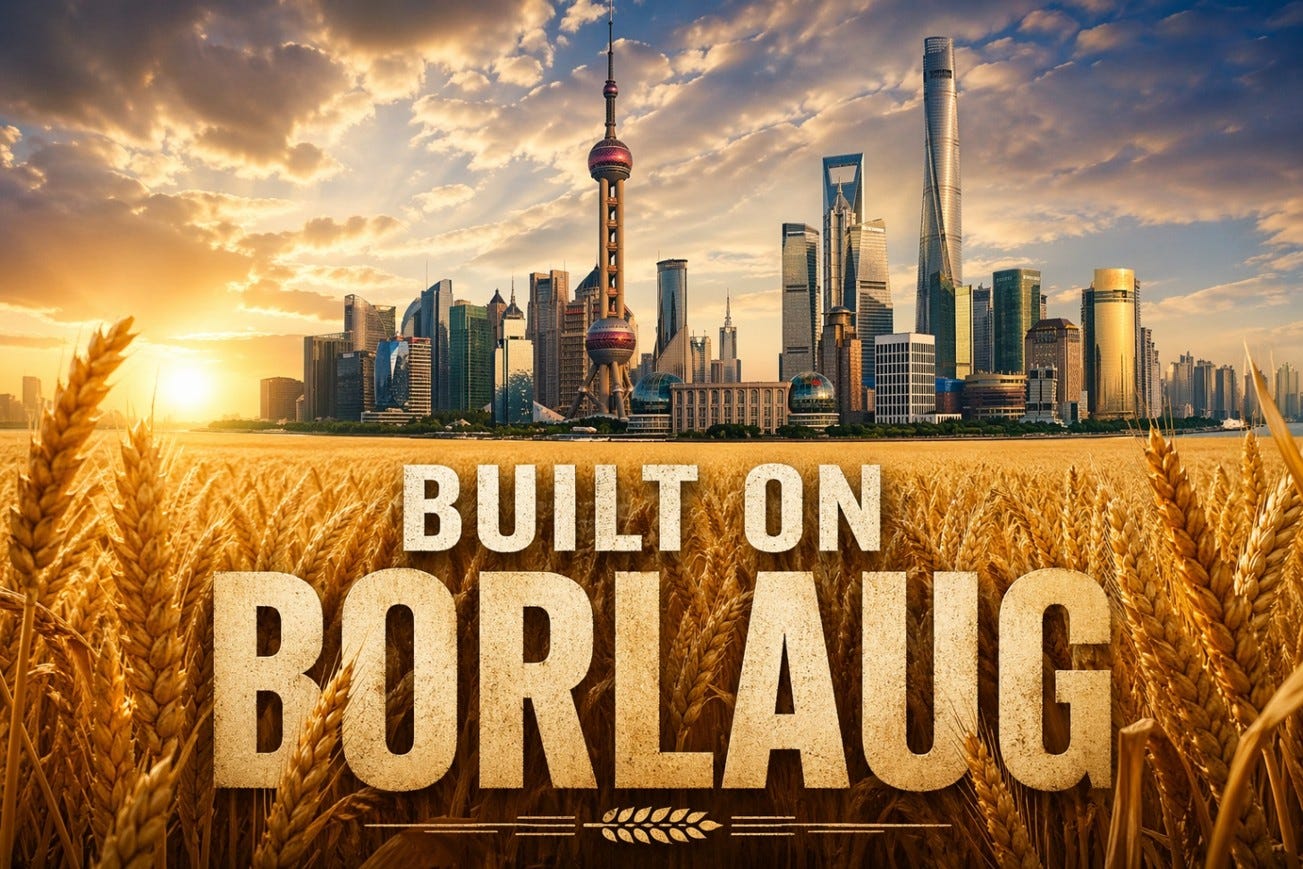
For most of history mass starvation was a recurring reality. Today it has largely faded from view. We worry about inflation, energy prices, climate change and artificial intelligence, but rarely about famine. Norman Borlaug’s Green Revolution was so successful it made “nature-based” famine forgettable.
In the 1960s mass starvation in Asia and elsewhere was widely expected. Yet, with the appalling exceptions of several politically driven famines, particularly in China , the catastrophe never came. Instead grain production in countries such as India and Pakistan surged as farmers adopted new high-yield varieties of wheat developed by Borlaug. The strongest argument for his importance is what did not happen. Awarding him the Nobel Peace Prize, not one for science, in 1970, the committee observed that “more than any other single person of this age, he has helped provide bread for a hungry world.” It is commonly estimated that his work helped save a billion lives, though today he is sometimes criticised for how he did it.
Breeding new crop varieties demands patience. The wheat, rice or apple varieties we will be buying in shops a decade from now are already moving through years of crossing, trials and selection. Breeders are constantly producing new varieties with higher yields, better disease resistance or traits consumers prefer. But nature sets immutable limits. Crops grow once a year, and if, for example, the spring weather doesn’t cooperate, there is simply no second chance.
Borlaug pushed his development cycle as fast as nature, economics and geography allowed. By crossing promising wheat lines and testing them across different climates and in different hemispheres, he accelerated the search for plants that could produce far more grain per field. He was not a theorist of hunger but a solver of it. While others argued about the coming famine, he set about wrestling against it.
From his late twenties in the mid-1940s, Borlaug pursued the goal of ending hunger with brutal determination. The son of Iowa farmers who had lived through the agricultural crises of the 1930s, he approached hunger as a problem to be solved rather than a subject to be debated. Accordingly, he practised something like start-up-style iteration a decade before Silicon Valley, rapid experimentation, field testing and scaling what worked.
The wheat varieties that emerged from this process were spectacularly productive, but they required different farming methods: more fertiliser, more irrigation and tighter management. Borlaug had to change not just seeds but minds. With support from American philanthropic foundations, notably the Rockefeller Foundation and later the Ford Foundation, he spent years travelling, persuading governments and cajoling farmers to try something new.
In 1965–66 India was facing severe food shortages after successive poor harvests. The government had agreed to import Borlaug’s new high-yield wheat varieties, but the programme nearly collapsed over bureaucracy. Officials argued that the Mexican seed had not passed the usual testing procedures required for new crop varieties.
Borlaug was furious. In his view famine carried more weight than paperwork. According to colleagues, he told officials they could either plant the seed immediately or personally take responsibility for the consequences.
They planted it. Within a few years the new varieties had transformed harvests. Wheat production surged and India moved from chronic shortages toward self-sufficiency. By helping remove the constant threat of famine from much of Asia, Borlaug’s work did more than increase harvests. It helped create the stability that allowed countries such as India and China to begin the economic rise that has reshaped the global economy.
Critics today argue that the Green Revolution relied too heavily on fertilisers, pesticides and irrigation. Borlaug responded that such concerns often came from countries where food security was already taken for granted. It was easier, he suggested, to worry about landscapes and wildlife once the immediate problem of feeding people had been solved. As he pointed out, “You can’t build a peaceful world on empty stomachs and human misery.”
There is a grain of truth in the critics position. Intensive agriculture does carry environmental costs. Farming isn’t natural. But there is also another perspective. By dramatically increasing yields, his Green Revolution reduced the amount of land needed to feed humanity. Higher yields can spare forests and wild land that would otherwise be converted into farms. This debate is sometimes known as the Borlaug dilemma: he would probably have disliked being associated with such an abstraction.
Despite saving perhaps a billion lives, Borlaug never became rich or particularly famous. He gave away all the rights to the varieties he developed.
Predicting disasters gets more attention than preventing them. The two should not be confused in any way. The world still debates whether Borlaug’s revolution was benign. But one fact is hard to ignore. The famine that many experts expected in the late twentieth century never arrived. And that absence, of hunger, of collapse, of those nine missed meals, may be the most powerful legacy any scientist could leave. Borlaug did not predict the future. He rolled up his sleeves, went out into the fields, and changed it.
________________________________________________
Borlaug, N.E. (1968). Wheat breeding and its impact on world food supply. Proceedings of the Third International Wheat Genetics Symposium.
If I could have dinner with someone no longer with us, I would choose Borlaug. What impact!!